R-454B Adoption: Switching from R-410A Under Subpart C
R-454B has emerged as the default low-GWP successor to R-410A in U.S. residential and light-commercial unitary equipment. It is not a drop-in retrofit, it carries an A2L mildly flammable classification, and it brings new code, training, and recordkeeping obligations once installed. This guide covers what facility managers and compliance officers need to evaluate before specifying R-454B — including how it compares to R-32 and R-466A, what oil and recovery equipment changes, and what continuing Subpart C obligations apply once it is in service.
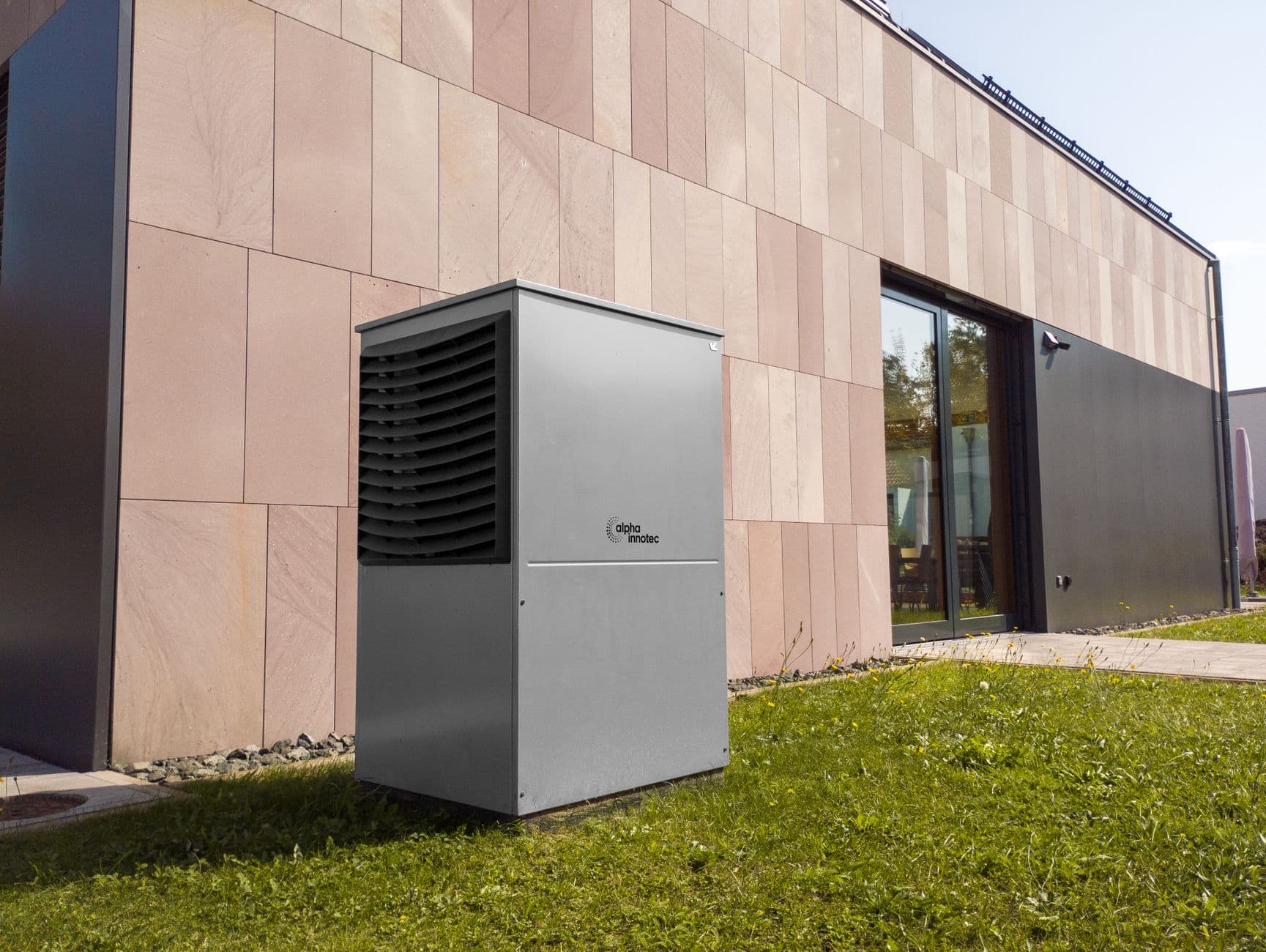
Photo by alpha innotec on Pexels
Why R-454B Emerged as the R-410A Successor
The AIM Act of 2020 directs EPA to cut U.S. HFC production and consumption 85 percent by 2036. R-410A, with a 100-year GWP of 2,088, was one of the earliest priority targets because it dominated the residential and light-commercial unitary market. Under EPA's Technology Transitions program, manufacturing of new R-410A residential central air conditioners, heat pumps, and most other self-contained equipment was prohibited after January 1, 2025. Equipment installed before that date remains lawful to operate and service.
Faced with that prohibition, the major U.S. residential OEMs — Carrier, Trane, Lennox, Goodman/Daikin, and others — converged on R-454B as the platform refrigerant for new equipment introduced for the 2025 model year. R-454B (a blend of R-32 at 68.9% and R-1234yf at 31.1%) carries a GWP of approximately 466 — a 78% reduction relative to R-410A — while staying close enough in volumetric capacity and discharge characteristics that existing system architectures could be adapted with manageable redesign.
The convergence was not unanimous — Daikin pushed R-32 for its mini-split and VRF lines, and Honeywell continued promoting R-466A as an A1 alternative — but the residential split-system market in the United States is now overwhelmingly R-454B. For facility managers spec'ing replacement equipment in 2026, R-454B is the refrigerant they will encounter most often.
GWP and Performance Comparison: R-454B vs R-410A vs R-32 vs R-466A
The four refrigerants below dominate the conversation around R-410A replacement. Each carries trade-offs in GWP, capacity, glide, and safety classification that drive different application choices.
| Property | R-410A | R-454B | R-32 | R-466A |
|---|---|---|---|---|
| GWP (AR4, 100-yr) | 2,088 | ~466 | 675 | ~733 |
| ASHRAE 34 Safety Class | A1 | A2L | A2L | A1 |
| Composition | R-32 / R-125 (50/50) | R-32 / R-1234yf (68.9/31.1) | Pure (difluoromethane) | R-32 / R-125 / R-13I1 |
| Temperature Glide | Near-azeotropic | ~1.5 °F | Zero (single component) | Low |
| Discharge Temperature | Baseline | Slightly lower than R-410A | Higher than R-410A | Similar to R-410A |
| Volumetric Capacity | Baseline | ~95% of R-410A | ~105% of R-410A | ~98% of R-410A |
| Primary U.S. Use | Legacy residential / light commercial | New residential central AC and heat pumps | Mini-splits, multi-splits, VRF | Light commercial where A1 is required |
Two practical notes on the numbers. First, the GWP values shown are the AR4 100-year values EPA uses for AIM Act allowance allocation. AR5 and AR6 values from the IPCC differ slightly; specify which accounting basis applies when reporting. Second, the small glide in R-454B (~1.5 °F) is operationally significant: it requires the system to be charged as a liquid from the cylinder and means that partial recharging without full evacuation will shift the composition over time.
For more detail on R-410A's phasedown timeline and the regulatory triggers that drove these replacements, see the dedicated R-410A replacement guide for facility planners.
A2L Safety Classification and Building Code Implications
R-454B carries an ASHRAE Standard 34 safety classification of A2L: lower toxicity (A) and a burning velocity at or below 10 cm/s (2L). The A2L category was created specifically to accommodate the new generation of low-GWP HFCs and HFOs that have mild flammability characteristics but burn slowly enough that ignition and propagation are difficult to sustain in normal occupancies. The category is widely characterized in industry materials as "mildly flammable."
Practically, that classification changes the rules in three areas facility teams need to confirm before installation:
- Charge limits under ASHRAE Standard 15-2022. Maximum refrigerant charge per circuit in occupied spaces is governed by the Lower Flammability Limit (LFL) and the conditioned volume. R-454B has an LFL of approximately 0.317 kg/m³. ASHRAE 15 tables and the IMC 2024 mechanical code derive a maximum allowable charge from these inputs.
- Building code adoption. The 2024 editions of the International Mechanical Code (IMC) and the Uniform Mechanical Code (UMC) — both of which reference ASHRAE 15-2022 — are the first model codes to fully accommodate A2L equipment. Many states and jurisdictions adopted them through 2024 and 2025; check the local edition before specifying. Where the older 2018 or 2021 IMC remains adopted, A2L installation may require an alternate means and methods petition.
- Mitigation hardware and detection. ASHRAE 15-2022 requires a refrigerant detection system on most A2L applications above defined charge thresholds. The detector must initiate ventilation or shutoff at a concentration not exceeding 25% of the LFL. For comfort cooling, the detector and shutoff are typically integrated into the indoor unit by the OEM and are not a separate scope item — but they are also not optional.
Technician training is the fourth practical implication. A2L refrigerants require recovery equipment listed for A2L use under UL 60335-2-40 (a standard incorporated by reference in IMC 2024), brazing practices that avoid open flame in spaces where charge has been released, and torch protocols updated for A2L handling. EPA Section 608 universal certification remains the federal baseline — but it does not by itself confer A2L competence, and several OEM warranties now require documented A2L training for warranty coverage on installation and service.
Practical note: A2L is not a code-stopper for most residential and light-commercial installations, but it is also not a free upgrade. Treat A2L conversion as a project that touches the mechanical scope, the electrical interlock scope, and the commissioning checklist — not just a refrigerant choice on a purchase order.
Oil Compatibility: Why POE Lubricant Remains the Standard
R-454B uses polyolester (POE) lubricant — the same family already used in R-410A systems — at viscosity grades of POE-32 or POE-68 depending on OEM specification. That continuity is a meaningful operational benefit: technicians familiar with R-410A handling practices do not need to re-learn oil chemistry, and most existing POE handling protocols carry over.
The compatibility benefit is conditional on three discipline points that apply to any POE system:
- Moisture control. POE is hygroscopic — it absorbs atmospheric moisture aggressively. An open POE container exposed to ambient air for under an hour can take on enough water to require replacement. Restrict cylinder open time, use sealed transfer equipment, and pull deep vacuums (500 microns or below) on the installed system before charging.
- No mineral oil or alkylbenzene flush. Mineral oil and alkylbenzene are immiscible with POE in the presence of HFC or HFO refrigerant. Residual quantities from a prior CFC or HCFC system are sufficient to cause oil return failures and compressor lockup. R-454B equipment from new OEM platforms ships with POE already charged at the factory — do not add or substitute.
- Filter-drier sizing and replacement. Use the OEM-specified filter-drier — typically a solid-core XH-9 (compatible with HFC and HFO blends) — and replace it on any open service event. Field-installed drier mismatches are one of the more common warranty claim disqualifiers documented by OEM service bulletins.
Recovery cylinders for R-454B must be color-coded horizon-blue/silver under AHRI Guideline N, listed for A2L service, and rated to the appropriate DOT specification. Reusing a yellow R-22 or pink R-410A cylinder for R-454B recovery is a regulatory violation under 49 CFR Part 173 and creates an immediate contamination risk.
Retrofit Limits: When R-454B Is Not a Drop-In
The single most important point for facility managers evaluating R-454B is this: R-454B is not approved as a retrofit refrigerant for existing R-410A equipment. No major OEM — Carrier, Trane, Lennox, Goodman/Daikin, or others — authorizes field conversion of an R-410A system to R-454B. The reasons are technical, regulatory, and contractual:
- EPA SNAP listings are application-specific. EPA's Significant New Alternatives Policy (SNAP) listings for R-454B identify acceptable end uses for new equipment — primarily residential and light-commercial unitary air conditioning and heat pumps. The listings do not generally authorize retrofit of legacy R-410A equipment, and conversion outside the listed conditions risks SNAP non-compliance under 40 CFR Part 82 Subpart G.
- System architecture differences. R-454B operates at slightly lower pressure than R-410A, with a small temperature glide and a different oil-refrigerant solubility curve. Expansion valves, line set sizing, compressor displacement, and refrigerant control logic are tuned to the design refrigerant. Drop-in substitution typically yields measurable capacity loss, elevated superheat or subcooling outside the design band, and shortened compressor life.
- Safety classification cannot be ignored. An existing R-410A system was not designed, installed, or commissioned against the A2L mitigation requirements of ASHRAE 15-2022. Forcing an A2L charge into an A1 design path is a code violation in jurisdictions that have adopted IMC 2024 or UMC 2024, and an insurance and liability exposure even where the code lag favors the operator.
- Warranty voidance. Every major OEM warranty bulletin on R-454B equipment explicitly voids warranty coverage for systems charged with a refrigerant other than the OEM-specified product. A field-converted system loses both the manufacturer warranty and, in many cases, the extended-service contract coverage purchased with the original equipment.
The supported path for moving an existing R-410A system into a low-GWP refrigerant is full equipment replacement with a new R-454B-charged unit, not field conversion. For most facilities, the economic question is therefore not "retrofit or replace" — it is "when does the existing R-410A unit reach the point where replacement is the right call." See the related retrofit vs. retirement decision framework under § 84.106 for the leak-rate triggers that often force that decision early.
AHRI Standards That Govern R-454B Equipment and Refrigerant
Three AHRI (Air-Conditioning, Heating, and Refrigeration Institute) standards are foundational when specifying or procuring R-454B systems. Each governs a different stage of the lifecycle.
AHRI Standard 700 — Specifications for Refrigerants
Defines the purity specifications and acceptable contaminant limits for refrigerants entering the U.S. market, including R-454B. Procurement teams should require a lot-specific Certificate of Analysis referencing AHRI 700 from any supplier providing virgin or reclaimed R-454B. The standard establishes the limits on moisture, non-condensable gases, acids, and other impurities that determine whether the refrigerant is fit for field use.
AHRI Standard 210/240 — Performance Rating of Unitary Equipment
Governs the rated capacity, SEER2, EER2, and HSPF2 ratings on R-454B residential and light-commercial unitary equipment that appear on AHRI directory listings and equipment nameplates. Procurement and design teams should specify AHRI 210/240 rated performance — not just nominal tonnage — when comparing R-454B equipment from different OEMs, since the test conditions and measurement points are normalized across the directory.
AHRI Standard 740 — Performance of Refrigerant Recovery, Recycling, and/or Reclamation Equipment
Establishes performance requirements for recovery, recycling, and reclamation machines. For R-454B, recovery equipment must be listed for A2L service and meet AHRI 740 minimum efficiency ratings. EPA Section 608 recovery efficiency requirements at 40 CFR § 82.158 cross-reference AHRI 740, so a Section 608 certified technician using a non-AHRI 740 recovery unit is not automatically in compliance.
Beyond AHRI, ASHRAE Standard 15-2022 and ASHRAE Standard 34-2022 govern the safety and refrigerant classification framework, and UL 60335-2-40 covers the product safety standard for A2L unitary equipment. The combined standards set — AHRI for purity and performance, ASHRAE for safety and classification, UL for product listing — is what an EPA inspector or insurance underwriter will look for in equipment documentation if questions arise.
Choosing Between R-454B, R-32, and R-466A for New Equipment
The refrigerant decision is usually constrained by OEM equipment platform availability — the facility specifies an equipment family, and the refrigerant comes with it. But where multiple OEMs are competing for the same scope, the refrigerant choice has practical consequences that justify deliberate selection.
| Application | Default Refrigerant | Rationale |
|---|---|---|
| Residential central AC and heat pumps | R-454B | Dominant U.S. OEM platform; lowest GWP among A2L options |
| Light-commercial unitary rooftop | R-454B | Same OEM platform; check IMC 2024 charge limits |
| Mini-split, multi-split, VRF | R-32 | Daikin, Mitsubishi, LG platform standard; zero glide simplifies field service |
| Facilities where A2L is code-blocked or policy-blocked | R-466A | A1 classification; non-flammable; higher GWP but accommodates legacy code paths |
| Centrifugal chillers | R-1234ze / R-513A / R-514A | Outside scope of R-454B; different OEM track |
| Commercial supermarket and cold storage | CO₂ (R-744), R-448A, R-449A | Separate transition path; not R-454B |
The choice of R-466A is the one that benefits from explicit deliberation. It carries a higher GWP than R-454B and R-32 but the A1 (non-flammable) classification removes the ASHRAE 15-2022 charge limits, refrigerant detection mandates, and code-edition adoption dependencies that A2L equipment must navigate. For a facility in a jurisdiction that has not adopted IMC 2024 or has occupancy restrictions on A2L deployment, R-466A may be the only path to a low-GWP replacement on the originally planned timeline.
The trade-off is platform availability. R-466A equipment is offered by a smaller set of OEMs and a narrower model range; do not assume like-for-like substitution against a planned R-454B procurement without confirming the SKU is in production for the rating class required.
Subpart C Compliance Obligations After Conversion
Switching to R-454B does not exit the facility from Subpart C — it generally keeps the facility inside it. R-454B has a GWP of approximately 466, which is well above the 53 GWP threshold that triggers leak management obligations under 40 CFR § 84.106. Any R-454B appliance with a full charge of 15 pounds or more is subject to the same leak-repair, inspection, and recordkeeping requirements that applied to the R-410A predecessor.
The continuing obligations include:
- Leak rate calculation. Owners must calculate an annualized leak rate whenever refrigerant is added to the appliance. The applicable threshold for comfort cooling is 10% annualized; for commercial refrigeration it is 20%; for industrial process refrigeration it is 30%. Exceeding the threshold triggers a 30-day repair clock.
- Substance management under § 84.104. Subpart C also covers procurement and sale of regulated substances. Recovered R-454B may only be sold to a new owner if it has been processed by an EPA-certified reclaimer under 40 CFR § 82.164. Buying or selling recovered refrigerant outside that channel is a Subpart C violation regardless of intent.
- Recordkeeping. Owners must maintain records of servicing dates, refrigerant added, leak inspections, leak rate calculations, repair work, verification testing, and disposition for at least three years. See the dedicated § 84.106(l) recordkeeping requirements guide for the full data element list and acceptable formats.
- Automatic leak detection where applicable. Equipment with a charge of 1,500 pounds or more used in commercial or industrial process refrigeration is subject to § 84.108 automatic leak detection requirements. Most R-454B residential and light-commercial unitary equipment falls well below this threshold, but large multi-system commercial sites can aggregate into ALD applicability — confirm at the appliance level, not the site level.
Compliance and recordkeeping tooling. A multi-site portfolio mixing R-410A legacy systems, new R-454B equipment, and any R-32 or R-466A units quickly accumulates documentation obligations that spreadsheets handle poorly. RefriTrak™ tracks each appliance by refrigerant type, GWP, full charge, leak rate calculations, repair history, and reclamation paperwork in a single auditable record set — which is what an EPA inspector will ask for if questions arise about a converted facility's Subpart C posture. Useful when the portfolio is mixed; less necessary when a single site has one refrigerant and one technician.
Practical Procurement and Commissioning Checklist
The following checklist consolidates the technical, regulatory, and contractual points raised above into a sequence usable for an actual R-454B project — whether a single replacement or a portfolio rollout.
1. Confirm the applicable local mechanical code edition
Verify whether IMC 2024 or UMC 2024 has been adopted in the jurisdiction of installation. If an older edition still applies, confirm whether the authority having jurisdiction (AHJ) accepts ASHRAE 15-2022 directly or requires an alternate means and methods filing. Build this confirmation into the procurement gate, not the commissioning gate.
2. Specify equipment by AHRI 210/240 rating, not nominal tonnage
Require submittals to identify the AHRI directory listing reference and the rated SEER2/EER2/HSPF2 values for the specific model and indoor coil match. Nominal tonnage is not a compliance basis.
3. Require A2L-certified technicians and AHRI 740 recovery equipment
Confirm the installing contractor employs technicians with documented A2L training in addition to EPA Section 608 universal certification, and that recovery equipment used on the site is UL listed for A2L service and AHRI 740 compliant. Include this in the contract scope.
4. Require an AHRI 700 Certificate of Analysis for delivered refrigerant
For any virgin or reclaimed R-454B delivered to the site, require a lot-specific CoA referencing AHRI Standard 700. Match the cylinder serial number to the CoA and the supplier's EPA allowance status — see the counterfeit refrigerants procurement guide for the supplier-verification steps.
5. Document the appliance under § 84.106(l) at commissioning
Open the recordkeeping file on day one. Record the refrigerant type, GWP, full charge in pounds, manufacturer, model, serial number, location, and installation date. This creates the baseline against which all subsequent leak rate calculations are made.
6. Build the leak inspection schedule into the operations plan
Schedule annual leak inspections for appliances with 15–500 pounds of charge and quarterly inspections for appliances above 500 pounds, unless an ALD system that meets § 84.108 covers the equipment. Use the EPA leak rate calculator to verify each addition stays under the applicable threshold.
Frequently Asked Questions
Can I retrofit my existing R-410A unit to R-454B to lower its GWP footprint?
No. No major OEM authorizes field conversion of R-410A equipment to R-454B, and EPA SNAP listings for R-454B do not generally authorize retrofit of legacy R-410A systems. The supported low-GWP path is full equipment replacement with an OEM R-454B-charged unit at end of useful life or when leak-rate triggers under § 84.106 force the decision.
What is the GWP advantage of R-454B over R-410A?
R-454B carries a 100-year GWP of approximately 466 compared with 2,088 for R-410A — a 78% reduction. On AR5 and AR6 accounting bases the absolute numbers shift slightly but the relative reduction is similar.
Do I need new recovery equipment for R-454B?
Yes, in most cases. Recovery equipment used for R-454B must be listed for A2L service under UL 60335-2-40 and meet AHRI Standard 740 performance criteria. Pre-A2L recovery units originally designed for R-22 or R-410A typically do not carry the A2L listing and cannot be lawfully used on R-454B systems.
Does Section 608 certification cover R-454B?
EPA Section 608 universal certification remains the federal baseline requirement to handle refrigerants, including R-454B. However, Section 608 does not by itself confer A2L competence; most OEM warranties and several state codes require additional documented A2L training for installers and service technicians. Confirm both before authorizing work.
What happens to my R-410A inventory now that new equipment manufacturing has stopped?
R-410A remains lawful to use for servicing existing equipment. Supply will continue from the reclamation stream and from remaining AIM Act allowances, but prices have risen substantially and are expected to continue climbing as the phasedown proceeds. Plan replacement of high-charge or high-leak R-410A systems on a timeline that does not require emergency R-410A purchases at spot-market pricing.
Are A2L refrigerants safe for residential occupancies?
The A2L classification was developed specifically to allow safe use of mildly flammable refrigerants in residential and light-commercial occupancies, subject to ASHRAE Standard 15-2022 charge limits, refrigerant detection where applicable, and compliant installation under IMC 2024 or UMC 2024. The OEM indoor unit typically integrates the required mitigation hardware. A2L is not equivalent to a propane system; it is a regulated category with prescribed engineering controls.
Related Resources
- R-410A Replacement Guide: AIM Act Compliance for Facilities — The companion piece focused on the R-410A side of the transition, including grandfathering and retire-vs-replace decisions.
- Recordkeeping Requirements Under § 84.106(l) — The data elements and retention obligations that apply to all Subpart C equipment, including new R-454B systems.
- Automatic Leak Detection Requirements Under § 84.108 — When ALD applies to commercial and industrial refrigeration equipment regardless of refrigerant choice.
- Counterfeit Refrigerants: Compliance & Safety Risk — Supplier verification steps that apply to R-454B procurement as tightly as they applied to R-410A.
- Retrofit vs. Retirement Decisions Under § 84.106 — When leak-rate exceedances force the decision earlier than the equipment's economic end of life.
Sources
- eCFR — 40 CFR § 84.106 (Leak Repair Requirements)
- eCFR — 40 CFR § 84.104 (Management of Regulated Substances)
- eCFR — 40 CFR Part 84 Subpart C (full text)
- EPA — Technology Transitions Program (AIM Act § (i))
- EPA — Significant New Alternatives Policy (SNAP) Program
- EPA — Section 608 Refrigerant Management Regulations
- AHRI Standard 700 — Specifications for Refrigerants
- AHRI Standard 210/240 — Performance Rating of Unitary Equipment
- AHRI Standard 740 — Performance of Refrigerant Recovery, Recycling, and Reclamation Equipment
- ASHRAE Standards 15-2022 and 34-2022 — Safety and Refrigerant Classification
- International Mechanical Code (IMC) 2024
- Federal Register — Technology Transitions Final Rule (Oct. 24, 2023)
- Federal Register — ER&R Final Rule (Oct. 11, 2024)