Counterfeit Refrigerants: What Procurement Managers Need to Know
Tighter HFC supply under the AIM Act has created a lucrative opening for bad actors selling illegally imported or mislabeled refrigerant. Procurement managers who buy non-compliant product face EPA civil penalties up to $124,426 per day, potential criminal liability, and equipment safety risks that no insurance policy fully covers. This article lays out what to look for and how to verify your supply chain before a purchase — not after an incident.
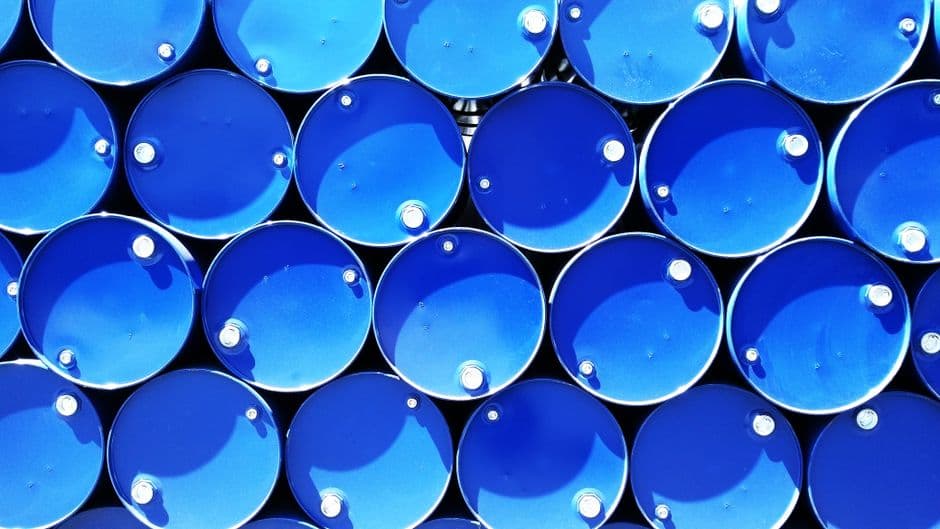
Photo by Conrad Marshall on Pexels
Why Counterfeit Refrigerants Are a Growing Problem in 2026
The AIM Act's HFC phasedown has progressively reduced the volume of allowances EPA issues for producing and importing regulated refrigerants. That restriction has pushed prices upward and created a gap that bad actors exploit by bringing in HFCs outside the allowance system — without proper documentation, without safety testing, and without regard for the downstream buyers who assume the legal and physical risk.
Federal enforcement is escalating. In February 2024, the EPA launched Operation Disrupt HFCs, the first coordinated criminal prosecution effort under the AIM Act. The operation signaled that the agency is treating illegal HFC imports as a priority, not a secondary concern. The scale of the problem is global: in December 2025, Spanish customs officials seized 48,500 kilograms of illegal F-gases valued at approximately $3.5 million — product that was destined for illicit distribution networks across multiple countries.
Procurement managers sit at the center of this problem. A purchase order from an unauthorized importer is not a neutral transaction — it makes the buyer a link in an illegal chain of custody and exposes the organization to penalties that begin the day the product arrives.
What 'Counterfeit' Actually Means in the Refrigerant Context
The term covers three distinct categories, each with different legal and safety profiles:
- Illegally imported HFCs: Bulk refrigerant brought into the United States without valid EPA consumption allowances under the AIM Act. The product may be chemically authentic but legally prohibited.
- Mislabeled cylinders: Containers labeled as one refrigerant but containing a different, adulterated, or lower-purity substance. These are the highest physical-safety risk.
- Uncertified DOT cylinders: Non-specification containers that have been refilled and resold without meeting 49 CFR Part 173 cylinder requirements.
The mislabeling problem carries real fatality risk. An AHRI white paper submitted to EPA documented R-134a cylinders that contained R-40 (methyl chloride). When R-40 contacts aluminum components — standard in most HVAC and refrigeration equipment — it reacts to form trimethyl aluminum, a pyrophoric compound that ignites spontaneously on exposure to air or moisture. Canadian authorities found similar R-40 contamination in counterfeit R-410A; several service-facility explosions and fatalities have been linked to contaminated cylinders globally.
Critical point: Mislabeled product can pass visual inspection without any indication of tampering. Only laboratory analysis or a certified refrigerant analyzer reliably identifies substitution before the refrigerant contacts system components.
The Regulatory Framework: AIM Act, 40 CFR Part 84, and Subpart C
The legal structure governing refrigerant importation and handling spans multiple federal regulations:
| Regulation | What It Covers | Who It Applies To |
|---|---|---|
| AIM Act (42 U.S.C. § 7675) | Prohibits importing bulk HFCs without valid EPA consumption allowances | Importers; downstream purchasers who enable violations |
| 40 CFR Part 84 Subpart C (eff. Jan. 1, 2026) | Recordkeeping and substance-management obligations; reclamation requirements cross-referencing § 82.164 | Equipment owners and operators — not just importers |
| DOT 49 CFR Part 173 Subpart G | Cylinder specifications for hazardous materials transport | Any person filling, transporting, or offering cylinders for transport |
The full text of 40 CFR Part 84 Subpart C is available on eCFR. The key expansion for procurement teams is Subpart C's reclamation requirement: recovered refrigerant cannot be sold to a new owner unless an EPA-certified reclaimer has processed it. Buying recovered refrigerant outside this channel is a Subpart C violation regardless of whether the buyer knew about the deficiency.
For more on refrigerant recordkeeping requirements under § 84.106(l), see the dedicated guidance on what documentation owners must retain and for how long.
Penalty Exposure for Procurement Managers
The penalty numbers are not abstract. The current maximum civil penalty under the Clean Air Act is $124,426 per day, per violation — adjusted annually for inflation. Each day a non-compliant product remains in service is a separate potential violation. For a facility running multiple systems charged with illegally imported refrigerant, the exposure compounds quickly.
Criminal exposure is real, not theoretical. The 2024–2025 prosecution of Michael Hart for HFC smuggling — brought under 18 U.S.C. § 545 — resulted in charges carrying up to 20 years imprisonment and $250,000 in fines. Hart's case was one of the first criminal prosecutions under Operation Disrupt HFCs, and the DOJ has signaled it will continue pursuing cases at the importer and distributor level.
Downstream buyers are not automatically shielded. The EPA's Frequent Questions guidance on HFC phasedown confirms that purchasing from an importer who lacked allowances does not automatically protect the buyer from enforcement consequences. Administrative consequences can also include allowance revocation and bans on future allowance receipt — effectively cutting a company off from any lawful HFC supply.
For a full breakdown of EPA penalty amounts and enforcement consequences under Subpart C, including real enforcement cases and how penalties compound across multiple systems, see the enforcement penalties reference.
Red Flags in the Refrigerant Supply Chain
Most counterfeit and illegally imported refrigerant enters procurement channels because buyers do not apply consistent scrutiny at the point of purchase. These are the indicators that warrant immediate rejection or escalated verification:
- Price significantly below market rate for the refrigerant type. The AIM Act phasedown has pushed legitimate product prices upward; a discount that seems too good to be true almost certainly reflects an unauthorized supply source.
- Cylinders missing or bearing hand-stamped DOT specification numbers, manufacturing dates, lot numbers, or hydro-test dates. Legitimate cylinders carry factory-stamped markings.
- Labeling with spelling errors, inconsistent fonts, absent CAS numbers, missing hazard pictograms, or no safety data sheet. These are consistent indicators of counterfeit labeling operations.
- Seller cannot provide import documentation, EPA allowance certificates, or chain-of-custody records tracing the product to a licensed importer or EPA-certified reclaimer.
- Online marketplace sourcing. A January 2025 DOT PHMSA advisory specifically flagged uncertified cylinders sold through e-commerce platforms as a safety and regulatory concern.
Practical note: An EPA Enforcement Alert on illegal HFC imports advises buyers to request supplier allowance documentation before purchase. If a supplier cannot produce this on request, treat that as a disqualifying red flag, not a gap to paper over later.
Supplier Verification: A Procurement Due-Diligence Checklist
The following steps represent the minimum due diligence a procurement team should apply before authorizing a refrigerant purchase, especially from a new or unfamiliar supplier.
1. Confirm Allowance-Holder Status
Verify that the supplier is an EPA-authorized allowance holder or purchases exclusively from one. EPA publishes annual allowance allocations by entity in the Federal Register. The November 2025 notice covering 2026 allocations is publicly available and lists every authorized holder by name.
2. Require EPA-Certified Reclaimer Credentials for Recovered Product
Any recovered or reclaimed refrigerant must have been processed by an EPA-certified reclaimer under 40 CFR § 82.164. EPA publishes a certified reclaimer list — cross-reference any reclaimed product against it before purchase.
3. Request Certificates of Analysis per AHRI Standard 700
Require a lot-specific certificate of analysis (CoA) specifying refrigerant composition against AHRI Standard 700 purity specifications. A legitimate supplier provides this as a standard transaction document. Absence of a CoA is a red flag.
4. Audit Chain of Custody
Know when, where, and through whom the refrigerant entered the United States. EPA's own buyer due-diligence guidance lists chain-of-custody documentation as a key verification step. A supplier who cannot trace their product to a named, licensed importer should not receive a purchase order.
5. Maintain Purchase Records for at Least Three Years
Retain supplier documentation, CoAs, allowance confirmation, and chain-of-custody records to align with Subpart C recordkeeping expectations. This documentation is your primary defense in an EPA audit. See the detailed guidance on how to prepare for an EPA refrigerant compliance audit.
Equipment Safety and Liability Consequences of Counterfeit Refrigerant Use
The regulatory penalties are serious, but the physical safety and financial liability consequences can be more immediate:
- Fire and explosion risk from R-40 contamination. As documented in the AHRI white paper, R-40 in aluminum-component systems can generate pyrophoric trimethyl aluminum that ignites on contact with air or moisture, causing fires, explosions, and structural damage.
- Recovery equipment destruction. Contaminated refrigerant recovered from a charged system can damage or destroy recovery and recycling equipment, potentially creating a hazardous waste disposal obligation for the technician and the facility.
- Insurance claim denial. Property and casualty underwriters are increasingly scrutinizing refrigerant sourcing in post-incident investigations. If non-compliant refrigerant is identified as a contributing factor, claims may be denied.
- Warranty voidance. Equipment manufacturers may void system warranties if laboratory analysis confirms that a non-specification refrigerant was charged into the system — even if the buyer was unaware of the substitution.
Building a Compliant Refrigerant Procurement Program
Addressing counterfeit refrigerant risk is not a one-time exercise — it requires process controls embedded in standard procurement workflows.
Source Only From Allowance Holders
Cross-reference every new supplier against the Federal Register annual allocation notice before the first purchase order. Do not rely on verbal assurances; obtain written documentation of allowance status.
Implement Incoming Refrigerant Testing
Deploy a certified refrigerant analyzer for incoming bulk deliveries and when establishing a new supplier relationship. Testing before charging any equipment is the only reliable method for detecting mislabeled product before it contacts system components.
Maintain Cylinder-Level Traceability Records
Link each cylinder serial number to its supplier documentation, purchase date, lot CoA, and service record. This traceability is what an EPA auditor will ask for first, and its absence substantially limits your ability to demonstrate good-faith compliance.
Use Digital Chain-of-Custody Tracking
Spreadsheets are not adequate for multi-site operations managing dozens of cylinders and service events. RefriTrak™ links each cylinder serial number to its supplier documentation, CoA, and service history — giving procurement teams the auditable chain of custody that EPA expects when it comes knocking. That documentation is your primary defense in any audit or enforcement inquiry.
These controls also reduce the risk of inadvertent purchases from unauthorized sources. When procurement staff know that every cylinder purchase must be traceable to an allowance holder with a corresponding CoA, below-market offers with incomplete documentation naturally fail the internal review process before reaching a purchase decision.
Sources
- EPA — Operation Disrupt HFCs
- EPA Enforcement Alert — Illegal Imports of HFC Super-Pollutants
- EPA — Enforcement Actions Under Title VI of the Clean Air Act
- EPA — Frequent Questions on the Phasedown of Hydrofluorocarbons
- EPA — HFC Allowances
- eCFR — 40 CFR Part 84 Subpart C (Management of Regulated Substances)
- Federal Register — Notice of 2026 Allowance Allocations (Nov. 20, 2025)
- AHRI White Paper — Reports of R-134a Contaminated with R-40