Reclaimed Refrigerant: Buying, Tracking, and the Compliance Case for Skipping Virgin
The AIM Act's HFC consumption-allowance system was designed to do two things at once: ratchet down virgin HFC supply, and tilt the market toward reclaimed product. By 2026, both effects are visible. Reclaimed R-410A, R-404A, and R-134a now compete on price with virgin equivalents, and Subpart C's recordkeeping rules make chain-of-custody documentation a routine procurement deliverable rather than an audit-week scramble. This article walks through the legal framework — § 84.106, § 82.164, and the AHRI Standard 700 purity floor — and the specific records EPA expects an equipment owner to keep on file.
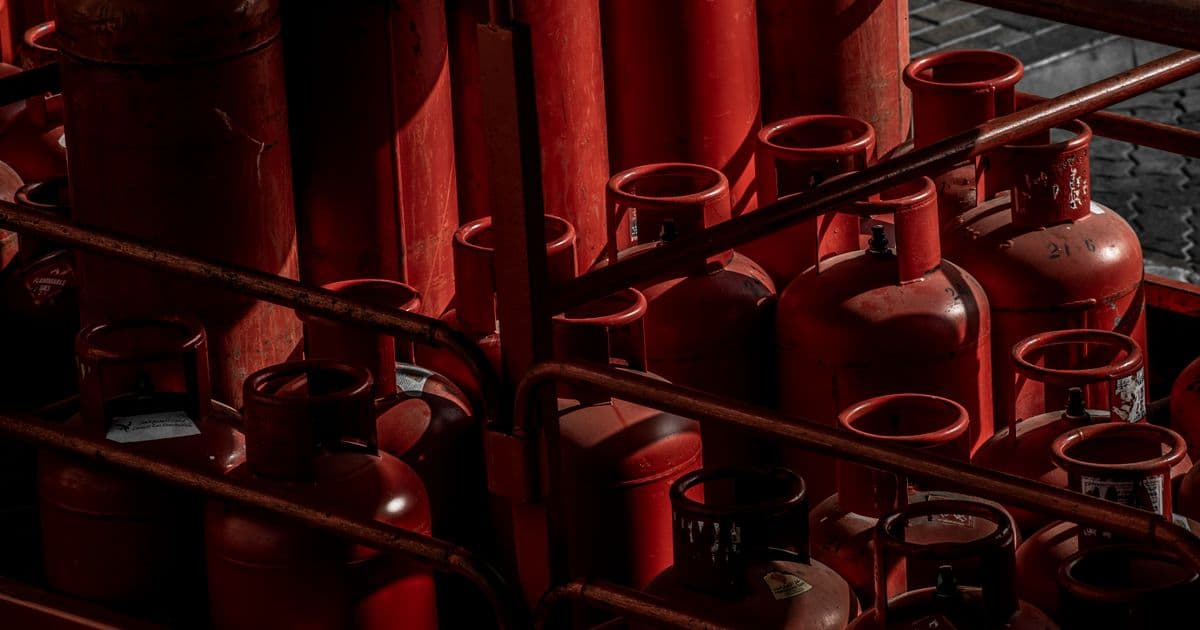
Photo by aboodi vesakaran on Pexels
Reclaimed, Recycled, and Recovered Are Not the Same Thing
The three terms are routinely confused at the loading dock, and the confusion is consequential. EPA has used distinct definitions since the Section 608 program was originally written, and Subpart C preserves them:
- Recovered refrigerant has been removed from a system into an external container, with no processing beyond transfer. Recovered product can be returned to the same owner's own equipment but cannot lawfully be sold to a new owner.
- Recycled refrigerant has been cleaned for reuse by oil separation and single- or multiple-pass filtration, typically at the job site. Recycled product can also be returned to the same owner's equipment but does not meet the AHRI-700 specification and cannot be resold.
- Reclaimed refrigerant has been processed to AHRI Standard 700 purity by an EPA-certified reclaimer, with each batch chemically analyzed and certified. Reclaimed product can lawfully be sold to a new owner, and only reclaimed product can.
The legal pivot point is the sale to a new owner. Under 40 CFR § 82.164, a refrigerant that has been used in any system cannot be sold to a different owner without being reclaimed first. That rule is incorporated by reference into Subpart C, so the same restriction governs HFC transactions under § 84.106 that previously governed ozone-depleting substances under Section 608.
The AHRI Standard 700 Purity Specification
AHRI Standard 700 is the purity specification EPA accepts as the benchmark for reclaimed refrigerant. It sets maximum allowable levels for the contaminants most likely to enter recovered product during field service:
| Contaminant Class | Why It Matters | Detected By |
|---|---|---|
| Non-condensable gases (air) | Raises head pressure; reduces capacity | Gas chromatography |
| Moisture | Forms acids in lubricant; corrodes components | Karl Fischer titration |
| Acidity | Attacks copper tubing and motor windings | Titration to a colorimetric endpoint |
| High-boiling residue | Coats heat-exchanger surfaces; impairs capacity | Gravimetric analysis |
| Particulates and chlorides | Damages expansion valves and compressors | Visual and silver nitrate test |
| Other refrigerants and impurities | Detects cross-contamination or adulteration | Gas chromatography |
A legitimate reclaimer issues a per-lot certificate of analysis (CoA) reporting the measured value for each contaminant class against the AHRI-700 limit. The CoA is the procurement document that confirms the cylinder contains what the label says it contains. The absence of a CoA, or a CoA that does not reference AHRI Standard 700 by name, should be treated as a disqualifying defect.
For more on the supply-chain risk created when this verification step is skipped, see the dedicated guide on counterfeit refrigerants and the documentation that catches them.
The EPA-Certified Reclaimer Program
Not every facility that owns a recovery machine is a reclaimer in the regulatory sense. Under § 82.164, a reclaimer must be certified by EPA, and that certification carries specific operating obligations:
- Process recovered refrigerant to the AHRI Standard 700 purity level.
- Verify each batch through chemical analysis before sale.
- Maintain records of incoming recovered material — including the generator (the technician or owner returning the refrigerant) and quantities — and records of outgoing reclaimed product.
- Submit annual reports to EPA covering quantities reclaimed by refrigerant type.
- Operate under the AIM Act reclaimer requirements that have progressively expanded since 2024 to align with the HFC phasedown.
EPA publishes a current list of certified reclaimers. Before placing an order with a new supplier, cross-reference their name against the list — and confirm the certification covers the specific refrigerants you are buying. Some reclaimers are certified for HFCs only, others for legacy CFCs and HCFCs, and the certification scope matters when the EPA inspector asks why your records show a Subpart C purchase from an entity not authorized to sell that material.
For an overview of how Section 608 and Subpart C interact — including which technician-side rules carry forward — see the comparison of Section 608 versus 40 CFR Part 84 Subpart C.
Why the Allowance System Pushes Owners Toward Reclaimed Product
The economics of reclaimed refrigerant are not a sustainability gesture — they are a direct consequence of how the AIM Act structures the supply side. Producers and importers receive annual consumption allowances, denominated in metric tons of CO2-equivalent. Each pound of virgin HFC they produce or import draws down those allowances. Reclaimed product does not.
The result is a structural cost gap. When allowances are tight — as they have been since the step-down to 60 percent of baseline in 2024 and further reductions scheduled for 2029 and 2036 — virgin HFC prices rise. Reclaimed product, untouched by the allowance system, becomes the relatively inexpensive option. The gap is most visible in high-GWP refrigerants like R-404A and R-410A, where the allowance draw per pound is large.
| Year | HFC Consumption Allowance (% of baseline) | Practical Effect on Reclaim Demand |
|---|---|---|
| 2022–2023 | 90% | Modest price gap; reclaim seen as optional |
| 2024–2028 | 60% | Significant virgin price increase; reclaim demand surges |
| 2029–2033 | 30% | Reclaim becomes the default for legacy refrigerants |
| 2034–2035 | 20% | Virgin reserved for new equipment and process applications |
| 2036 onward | 15% | Reclaim and substitutes dominate service market |
For more on the phasedown trajectory and how it affects equipment planning, see the dedicated HFC phasedown schedule reference.
Chain of Custody From Recovery to Recharge
A defensible chain of custody for reclaimed refrigerant has five documented links, and EPA inspectors increasingly look for all five when they audit a facility's § 84.106(l) records.
1. Recovery from the originating system
The technician who recovers the refrigerant should document the originating system (asset ID), date, refrigerant type, recovered quantity in pounds, and the receiving cylinder serial number. This is the only record that ties the molecules in a recovery cylinder to a specific piece of equipment.
2. Transfer to the certified reclaimer
A bill of lading or transfer manifest should identify the generator, the reclaimer (by EPA certification number), the cylinder serial numbers being transferred, and the date of shipment. The reclaimer should issue a receipt acknowledging the cylinders and net pounds received.
3. Reclamation and certificate of analysis
The reclaimer processes recovered material to AHRI-700 and issues a CoA for each outgoing lot. The CoA references the lot number, refrigerant identity, measured contaminant levels, and the AHRI-700 limits. This document is the procurement deliverable when reclaimed product is sold.
4. Sale and shipment to the new owner
The purchase invoice should identify the seller, the buyer, the reclaimer's EPA certification number (if the seller is a distributor rather than the reclaimer itself), the lot number, refrigerant type, net weight, and cylinder serial numbers. The invoice and the CoA together establish the lawful origin of the product.
5. Recharge into the receiving system
The service record should document the receiving system asset ID, date, technician identity, pounds added, the source cylinder serial number, and the refrigerant type. This is the owner-facing record that closes the loop and connects the upstream CoA to the equipment now charged with the product.
When all five links are documented and indexable by cylinder serial number, an audit response takes minutes. When any one of them is missing, the response becomes a forensic exercise across invoices, service tickets, and supplier emails — and the gap is precisely where EPA assumes a violation occurred until the owner proves otherwise.
What § 84.106(l) Wants on File for Each Pound Added
Subpart C's recordkeeping rule at § 84.106(l) is the operative provision for equipment owners and operators. For each refrigerant addition to a regulated appliance, the following information must be retained for at least three years:
- Identification of the appliance — typically an asset tag, location, full-charge capacity, and refrigerant type.
- Date of the service event and the type of service performed (leak repair, maintenance, charging, retrofit).
- Quantity of refrigerant added or recovered, in pounds.
- Source of the refrigerant added — virgin from an allowance holder, or reclaimed from an EPA-certified reclaimer. Identifying the source is what allows EPA to confirm the transaction did not involve an unauthorized importer or recovered-only product sold improperly to a new owner.
- Cylinder serial number tied back to the certificate of analysis on file.
- Identity of the technician performing the service, including their Section 608 certification number.
The retention clock under § 84.106(l) is at least three years, and the obligation extends three years past equipment retirement. For a deeper walk-through of the full recordkeeping framework, see the dedicated § 84.106(l) recordkeeping guide.
Practical note: EPA does not require a specific recordkeeping format. Spreadsheets, PDFs, and service ticket archives are all acceptable in principle. What matters is that the records exist, are tied to specific cylinders and assets, and can be produced on request. The recordkeeping failures that surface in enforcement are almost always failures of organization, not failures of format.
A Procurement Checklist for Reclaimed Refrigerant
The following checklist captures the verification steps a compliance-minded procurement team should run before authorizing a reclaimed-refrigerant purchase order. None of these add meaningful friction; all of them are missing from the file when something goes wrong.
- Confirm the seller is either an EPA-certified reclaimer or distributes product from one. Capture the reclaimer's EPA certification number in the supplier record.
- Cross-reference the reclaimer against EPA's current certified reclaimer list. Note the date of verification.
- Require a lot-specific certificate of analysis referencing AHRI Standard 700. Reject orders that arrive without one.
- Verify cylinder DOT specifications, hydro-test dates, and the absence of hand-stamped or altered markings on receipt. Mismatched or missing markings warrant return rather than acceptance.
- Record each cylinder serial number in the inventory system at the point of receipt and link it to the CoA, the invoice, and the supplier record.
- Match each pound charged into a system back to a specific cylinder and CoA in the service record. Do not allow charging from unidentified cylinders.
- Retain all of the above for at least three years past the equipment's retirement.
For a related procurement framework focused on legitimate-supplier verification, see the counterfeit refrigerant due diligence checklist.
Tracking Reclaimed Refrigerant at Scale
For a single-site operator with a handful of cylinders, a binder of CoAs and a service log can satisfy § 84.106(l). For a multi-site owner running hundreds of pieces of equipment across multiple regions, spreadsheets begin to fail in predictable ways: cylinder serial numbers get mistyped, CoAs are filed against the wrong supplier record, and the link between an asset's charge history and the source cylinder breaks. Those breaks are what an EPA inspector tends to find.
Purpose-built refrigerant compliance software like RefriTrak™ addresses the same recordkeeping problem at multi-site scale: each cylinder serial number links to its supplier, its certificate of analysis, and every service event where its contents were charged into a piece of equipment. The audit response question — "produce the chain of custody for the refrigerant added to this asset on this date" — becomes a single query rather than an excavation. That is the practical use case for which the tool earns its keep.
Whatever the tool of choice, the underlying discipline is the same: cylinder-level traceability, indexed by serial number, with CoAs and invoices retrievable on demand. The format is the owner's choice; the substance is not.
Common Pitfalls in Reclaimed Refrigerant Procurement
A handful of procurement-side mistakes recur across enforcement inquiries and audit findings. Knowing the pattern is half the mitigation.
- Buying "reclaimed" from a non-certified seller. Any seller can label a cylinder "reclaimed." Only an EPA-certified reclaimer can lawfully sell reclaimed product. Verify the certification, not the label.
- Accepting product without a CoA. A reclaimer that cannot produce a lot-specific certificate of analysis is either non-certified or non-compliant. Either way, the cylinder should be refused at the dock.
- Mixing recovered and reclaimed cylinders in storage. Recovered product belongs to the system it came out of; reclaimed product can be charged anywhere. Co-mingling them in a single storage area without clear labeling invites the wrong cylinder into the wrong system.
- Discarding CoAs after the cylinder is emptied. The CoA is the document that proves the molecules added to a piece of equipment were lawfully sourced. It must remain on file as long as the system charge it supports is being recorded — typically the full three-year retention window, and ideally three years past equipment retirement.
- Assuming a distributor handles the recordkeeping. A distributor's records are useful but do not substitute for the owner's § 84.106(l) records. The owner is the regulated party; the documentation has to live in the owner's file.
For related guidance on preparing for an EPA inspection, see the EPA refrigerant audit preparation guide.
How Section 608 Still Applies After Subpart C Takes Effect
A common point of confusion: Section 608 has not been repealed. Subpart C extends and updates the regulatory regime for HFCs but incorporates the Section 608 framework by reference for the activities it covers — including reclamation. Specifically:
- Technician certification. Anyone who opens a system to the atmosphere or transfers refrigerant between systems must still hold a Section 608 certification (Type I, II, III, or Universal as appropriate).
- Recovery and evacuation standards. The required evacuation levels and recovery equipment certification rules in Section 608 continue to apply to HFCs under Subpart C.
- Reclamation requirement. The § 82.164 prohibition on selling recovered refrigerant to a new owner without reclamation is the same rule that applies to Subpart C transactions. Subpart C does not create a parallel regime — it relies on the existing one.
- Reclaimer certification and reporting. Reclaimer certification, batch analysis, and annual reporting obligations originate in Section 608 and apply equally to HFC reclamation under Subpart C.
The practical effect is that an HVAC service organization does not need two parallel compliance programs — it needs one program that honors the Section 608 technician-side rules and the Subpart C owner-side rules together. For a side-by-side comparison, see the Section 608 vs. Subpart C reference.
Frequently Asked Questions
Can a technician sell recovered refrigerant to another owner without reclaiming it?
No. Under 40 CFR § 82.164, recovered refrigerant cannot be sold to a new owner unless it has been reclaimed by an EPA-certified reclaimer to AHRI Standard 700 purity. Recovered-only product can be returned to the same owner's equipment but not sold to a different owner.
Does reclaimed refrigerant count against an importer's HFC consumption allowance?
No. Reclaimed refrigerant does not count against the AIM Act consumption allowance system because it has already entered the U.S. market once. This is a key reason reclaimed product is expanding as virgin HFC supply tightens — and why the price gap between virgin and reclaimed has widened since the 2024 step-down to 60 percent of baseline.
What documentation should a buyer require from a reclaimer?
At minimum: the reclaimer's EPA certification number, a lot-specific certificate of analysis referencing AHRI Standard 700, the cylinder serial number, the refrigerant type and net weight, and a purchase invoice tying the transaction together. These records support § 84.106(l) compliance and should be retained for at least three years.
Are equipment manufacturer warranties affected by use of reclaimed refrigerant?
In general, no — equipment manufacturers accept properly certified reclaimed refrigerant. Some OEMs require documentation of AHRI-700 conformance on file before approving warranty claims. The warranty risk is associated with non-certified or adulterated product passed off as reclaimed, not with reclaimed product as a category.
How does the reclamation rule affect Subpart C recordkeeping?
Section 84.106(l) requires the source of each pound of refrigerant added to be documented. Identifying the source as "reclaimed from an EPA-certified reclaimer" (with the certification number and CoA on file) satisfies that requirement. Identifying it as "recovered" from an unspecified source — or leaving the source field blank — does not.
What happens if I cannot produce a CoA during an EPA audit?
The absence of a CoA does not by itself prove a violation, but it removes the owner's primary evidence that the product charged into the system was lawfully sourced. EPA may treat the gap as a recordkeeping violation under § 84.106(l) and may presume the underlying transaction was non-compliant unless the owner can produce alternative documentation establishing the source.
Sources
- eCFR — 40 CFR § 84.106 (Leak Repair Requirements)
- eCFR — 40 CFR § 84.110 (Disposal of Appliances)
- eCFR — 40 CFR § 82.164 (Reclamation Requirements)
- EPA — Stationary Refrigeration and Air Conditioning (Section 608)
- EPA — Refrigerant Reclamation and Certified Reclaimers
- EPA — HFC Allowances Under the AIM Act
- EPA — Frequent Questions on the HFC Phasedown
- AHRI — Standard 700: Specifications for Refrigerants
- Federal Register — Emissions Reduction and Reclamation Final Rule (October 11, 2024)
- 42 U.S.C. § 7675 — American Innovation and Manufacturing Act