Heat Pump Refrigerant Considerations Under the AIM Act
Heat pumps sit at the intersection of three federal policies that pull in different directions: the AIM Act's aggressive HFC phasedown, the Inflation Reduction Act's incentives for electrification, and 40 CFR Part 84 Subpart C's leak and recordkeeping rules. Specifiers, installers, and facility owners now have to pick a refrigerant that satisfies the 700 GWP cap for residential AC and heat pumps, fits the system size, handles the A2L flammability question, and doesn't disqualify the equipment from IRA rebate eligibility. This guide walks through the practical decisions — R-32 versus R-454B versus R-466A, residential versus commercial, when the small-charge exemption applies, and where the rule remains ambiguous.
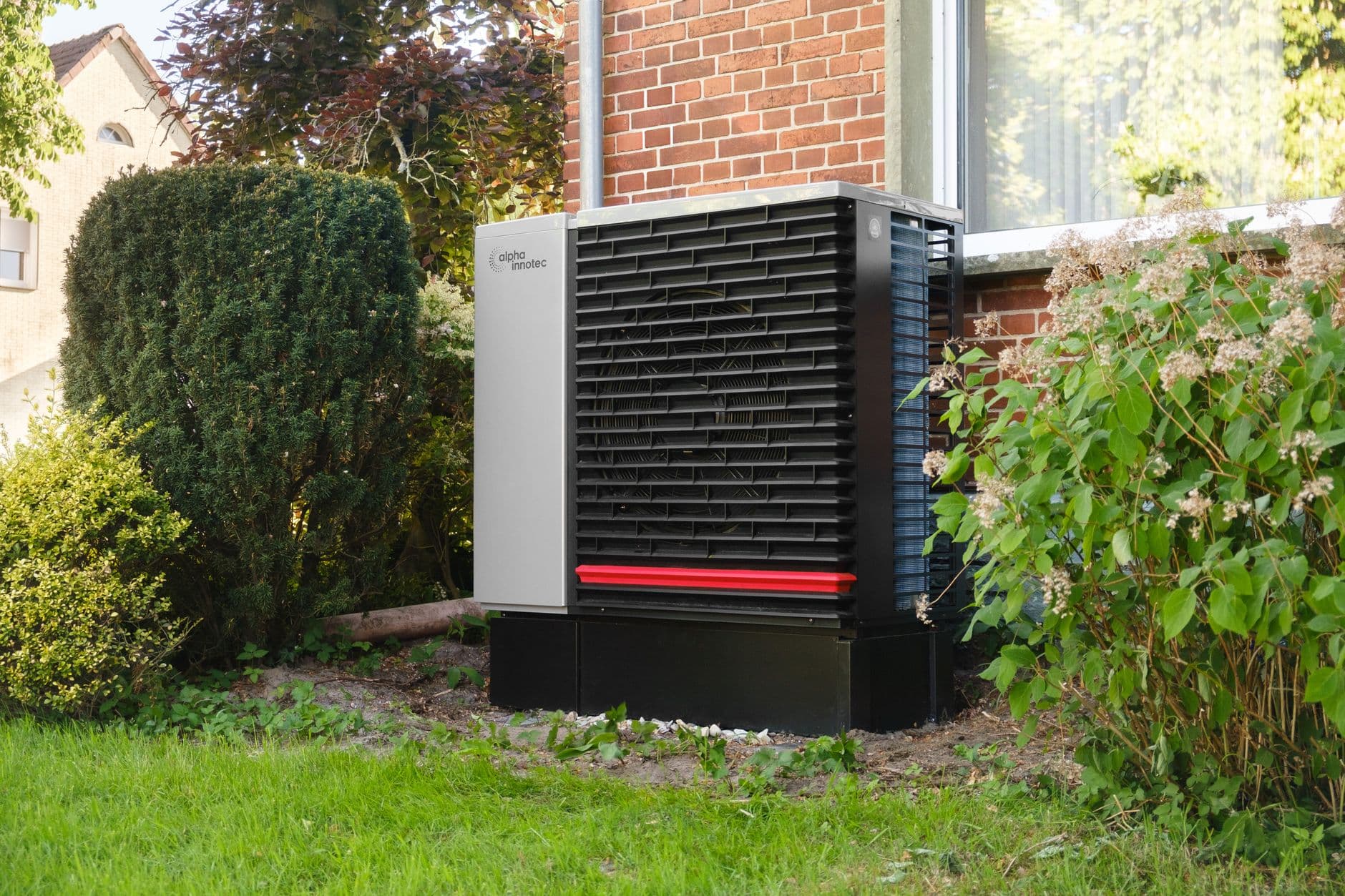
Photo by alpha innotec on Pexels
Why Heat Pumps Are the Hard Case
Heat pumps are doing two jobs at once. Federal climate policy wants more of them in service — the Inflation Reduction Act subsidizes residential installations with tax credits and HEEHRA rebates, and state programs in California, New York, Massachusetts, and Maine stack additional incentives on top. At the same time, the AIM Act is methodically removing the refrigerants that those same heat pumps historically ran on. R-410A — the workhorse of residential heat pumps for two decades — has a GWP of 2,088 and is prohibited in new residential AC and heat pump systems manufactured on or after January 1, 2025 under EPA's Technology Transitions rule.
That leaves the industry rebuilding around lower-GWP A2L refrigerants while simultaneously expanding heat pump deployment. Three refrigerants dominate the conversation: R-32 (GWP 675), R-454B (GWP 466), and R-466A (GWP 733). Each has tradeoffs in flammability, efficiency, equipment compatibility, and supply. Subpart C overlays leak detection, repair, and recordkeeping obligations on top of the choice — and those obligations vary materially with charge size, equipment category, and GWP.
For a fuller history of how the industry arrived here, see the companion piece on R-410A replacement options under Subpart C. This article focuses specifically on the heat pump decision — where the calculus differs from straight cooling-only applications.
The Regulatory Framework for Heat Pumps
Three distinct EPA actions converge on heat pump refrigerant choice:
| Rule | What It Does for Heat Pumps | Effective Date |
|---|---|---|
| AIM Act Phasedown (Subpart A) | Caps HFC production and import allowances; tightens supply of R-410A and R-407C used in legacy heat pumps | Phased: 2022 baseline → 85% reduction by 2036 |
| Technology Transitions Rule (Subpart B, § 84.54) | Prohibits manufacturing or importing new residential AC and heat pump systems using refrigerants with GWP > 700 | January 1, 2025 (manufacture); installation sell-through through January 1, 2026 |
| Emissions Reduction & Reclamation Rule (Subpart C, §§ 84.104, 84.106) | Leak rate caps, repair timelines, recordkeeping, and reclamation requirements for heat pumps above charge-size thresholds | January 1, 2026 |
Subpart B sets the upstream constraint — which refrigerants can legally be put into a new heat pump at the factory. Subpart C governs what owners and operators must do once that equipment is in service. The two work in series: by 2026, every newly installed residential heat pump is running an A2L refrigerant below the 700 GWP cap, and Subpart C's leak management framework applies the moment that equipment is commissioned.
Commercial and industrial heat pumps face a different limit. The Technology Transitions rule sets a GWP cap of 700 for residential and light commercial unitary AC/HP and a separate cap of 700 for chillers used for comfort cooling, but variable refrigerant flow (VRF) systems used in commercial applications received a separate, later compliance date and a slightly different cap structure. Specifiers should confirm the applicable GWP threshold against the specific equipment subcategory before issuing a purchase order.
R-32, R-454B, and R-466A: The Three Real Candidates
The lower-GWP alternatives that have meaningfully entered the U.S. heat pump market are limited. R-32 and R-454B account for the overwhelming majority of new equipment shipped in 2025. R-466A is a newer entrant designed specifically to address A2L flammability concerns. The table below summarizes the practical differences:
| Property | R-32 | R-454B | R-466A |
|---|---|---|---|
| GWP (AR4) | 675 | 466 | 733 |
| ASHRAE 34 Safety Class | A2L | A2L | A1 (non-flammable) |
| Composition | Pure HFC (difluoromethane) | Blend: 68.9% R-32 / 31.1% R-1234yf | Blend: 49% R-32 / 11.5% R-125 / 39.5% R-13I1 |
| Glide | Zero (azeotropic) | ~0.2°F (near-azeotropic) | ~0.4°F |
| GWP < 700 cap met? | Yes | Yes | No — slightly over for residential AC/HP |
| Typical OEM adoption | Daikin, Mitsubishi, Fujitsu, Gree (mini-splits and VRF) | Carrier, Lennox, Trane, Bosch (residential split heat pumps) | Limited — primarily commercial rooftop applications |
The first-order observation: R-466A has a GWP of 733, which is above the 700 GWP cap that the Technology Transitions rule imposes on residential AC and heat pump equipment. It cannot legally be charged into new residential heat pumps after January 1, 2025. Its niche is commercial and rooftop applications where its A1 non-flammability classification simplifies safety code compliance — particularly in occupancies where A2L installations remain contentious under local building codes.
For residential heat pumps, the practical choice is R-32 or R-454B. Both are A2L (mildly flammable, lower burning velocity). R-454B has the lower GWP and is widely used by Carrier, Trane, Lennox, and Bosch. R-32 has the simpler thermodynamics (it's a pure refrigerant, not a blend), which makes service and recharge after a leak more forgiving. The choice is largely dictated by what the OEM specified for the equipment.
A2L Flammability: What Specifiers and Installers Need to Know
A2L refrigerants are classified as "lower flammability" under ASHRAE Standard 34. They have a lower flammability limit above 3.5% by volume in air, a burning velocity below 10 cm/s, and a heat of combustion below 19 MJ/kg. In practice, they will burn under specific concentration and ignition conditions but do not propagate flames the way Class 3 refrigerants (propane, isobutane) do.
For heat pumps specifically, the A2L transition has driven three design changes that installers will encounter on every new unit:
- Mitigation circuitry. Indoor units are now shipped with factory-installed refrigerant sensors and interlocks. When the sensor detects a refrigerant concentration above the response threshold, the indoor fan automatically engages to dilute the leak and the compressor is locked out. ASHRAE Standard 15-2022 and the 2024 International Mechanical Code (IMC) recognize these mitigation strategies in lieu of traditional machinery room ventilation for charges below the allowable limits.
- Charge limits per occupied space. UL 60335-2-40 (4th edition) caps the refrigerant charge that may be released into a single occupied space based on room area. For typical residential ducted split systems using R-32 or R-454B, the limits permit common 2–5 ton charges in standard rooms — but small bedrooms with a ductless head can run into the limit. Verify room volume against the m1, m2, and m3 charge tables in UL 60335-2-40 before specifying a head location.
- Service practices. Brazing requires nitrogen purging at higher rigor than with R-410A; sparking electrical equipment must be kept clear of leak zones; recovery and evacuation procedures follow the AHRI 700-compliant practices specific to A2L blends. Section 608 certification was updated to cover A2L handling — a technician without current A2L training should not be charging or recovering these refrigerants on heat pump equipment.
The flammability designation does not change the Subpart C obligations — a leak is a leak under § 84.106 regardless of the refrigerant's safety classification — but it materially changes how leaks must be detected and remediated.
§ 84.104 Applicability: The Charge-Size Sweet Spot
Subpart C's leak management framework under § 84.104 and § 84.106 only attaches to equipment containing a regulated substance (or substitute with GWP > 53) in a full charge of 15 pounds or greater. For typical residential heat pumps, the practical implication is significant:
| Heat Pump Type | Typical Charge | Subject to § 84.106 Leak Rules? |
|---|---|---|
| Ductless mini-split, single zone, 1–2 ton | 1.5–3 lbs | No |
| Residential ducted split, 2–3 ton | 5–9 lbs | No |
| Residential ducted split, 4–5 ton | 9–14 lbs | No |
| Multi-zone ductless or larger VRF branch | 15–30 lbs | Yes |
| Commercial VRF, light commercial rooftop, water-source HP loops | 20–150+ lbs | Yes |
| Air-source heat pump (chiller) for commercial space heating | 100–1,000+ lbs | Yes |
The takeaway: the overwhelming majority of residential heat pump installations fall below the 15-pound threshold and are exempt from Subpart C's leak rate calculation, repair timeline, and recordkeeping requirements. That's the "sweet spot" the regulation effectively creates: a contractor installing a 3-ton ducted R-454B heat pump in a single-family home has zero § 84.106 obligation attached to the equipment after installation.
That changes the moment the system scales up. A multi-zone ductless system serving a small office, a VRF system in a mid-rise residential building, or a commercial rooftop heat pump on a retail building can easily exceed 15 pounds. Once over the threshold, the owner is subject to:
- Leak rate calculation after every refrigerant addition (§ 84.106(b))
- Repair within 30 days when annual leak rate exceeds 10% (comfort cooling) — see the applicability threshold guide for the threshold rules
- Three-year recordkeeping per § 84.106(l), including baseline charge documentation
- Use of EPA-certified reclaimed refrigerant when recharging substantively under § 82.164 cross-references
The 15-pound threshold creates a meaningful design optimization opportunity: when system design is on the bubble, splitting one large charge into two independent circuits below 15 pounds each can remove the equipment from Subpart C's leak management obligations entirely. That is not always the right engineering choice — but it is worth knowing as a tool in the specifier's kit.
IRA Incentives and the GWP Decision
The Inflation Reduction Act created two federal incentive streams for residential heat pump installations:
- 25C Energy Efficient Home Improvement Credit — up to 30% of cost, capped at $2,000 per year for heat pumps, available to all taxpayers regardless of income, claimed on their federal return.
- HEEHRA / HOMES rebates (50122 / 50121) — point-of-sale rebates administered through state energy offices. HEEHRA caps a heat pump rebate at $8,000 for low- and moderate-income households; HOMES is a measured-savings program.
The IRA itself does not specify a refrigerant GWP cap as a credit eligibility condition. The relevant eligibility criteria turn on ENERGY STAR certification and the equipment's efficiency ratings (SEER2, HSPF2, EER2). However, several states administering HEEHRA dollars have adopted refrigerant-related eligibility overlays. California, Maine, and Washington require that rebated equipment use a refrigerant with GWP at or below the limit set by the state's own short-lived climate pollutant program — which aligns with or is stricter than the federal 700 GWP cap.
For contractors and homeowners, the practical effect: any heat pump shipped in 2026 that satisfies the AIM Act Subpart B requirements will automatically satisfy state HEEHRA refrigerant overlays. The risk arises with legacy R-410A inventory and gray-market imported equipment. EPA's November 2025 Federal Register guidance clarified that the "installation sell-through" period ends January 1, 2026 — after that, a new R-410A residential heat pump cannot be installed in the United States regardless of when it was manufactured. Installations performed in violation of this prohibition cannot lawfully claim IRA credits.
For homeowners: if a contractor offers a "deep discount" on R-410A heat pump equipment in 2026, walk away. The unit cannot be lawfully installed, the installation will not qualify for IRA credits, and the homeowner's warranty position is precarious.
Commercial Heat Pumps: A Different Calculus
Commercial heat pumps face a fundamentally different decision matrix than residential. Charge sizes typically exceed 15 pounds, which triggers full Subpart C obligations. Equipment often sits in mechanical rooms, on rooftops, or in basement plant rooms, where building codes and ASHRAE Standard 15 impose ventilation, leak detection, and machinery room requirements independent of EPA rules.
The decision tree commercial specifiers face:
Variable Refrigerant Flow (VRF)
R-32 has become the dominant choice for VRF in 2025–2026. Daikin, Mitsubishi, LG, and Samsung have shipped R-32 VRF units in the U.S. since mid-2024. Charges can range from 15 pounds in single-branch light commercial installations to several hundred pounds in large multi-floor systems. Owners face full § 84.106 leak rate calculation and repair obligations, including the 30-day repair window for systems that exceed the 10% annual leak rate cap on comfort cooling.
Air-Source Heat Pump Chillers
For schools, hospitals, multifamily housing, and other commercial spaces electrifying space heating, air-source heat pump chillers using R-454B, R-32, or R-1234ze(E) (GWP < 1) are the typical specification. Charges range from 100 to 1,000+ pounds. These systems are squarely within Subpart C's scope and additionally trigger ASHRAE Standard 15 machinery room requirements for refrigerant detection and ventilation. Where charge size approaches the 1,500-pound threshold of § 84.108, automatic leak detection becomes mandatory for industrial process applications — see the ALD requirements guide for the applicability boundary.
Packaged Rooftop Heat Pumps
Light commercial rooftop units (RTUs) with heat pump capability are transitioning more slowly than residential. R-454B and R-32 dominate new installations. R-466A occupies a small but growing share where building codes restrict A2L use indoors and the rooftop location partially mitigates exposure. Charge sizes commonly run 8–25 pounds per circuit, putting many installations near or above the 15-pound threshold.
Water-Source Heat Pump Loops
Each terminal water-source heat pump unit typically contains less than 5 pounds of refrigerant, well below the Subpart C threshold. The boiler-tower loop itself is water, not refrigerant. This category is currently one of the more regulation-friendly heat pump architectures for large commercial buildings, though installers should still confirm individual unit charges if a single circuit aggregates across multiple terminal units.
Compliance Recordkeeping for Heat Pumps Above the Threshold
When a heat pump system exceeds the 15-pound charge threshold, Subpart C imposes a documentation regime that is materially more demanding than what most residential HVAC operations have historically maintained. The owner — not the service contractor — carries the recordkeeping obligation under § 84.106(l).
For each above-threshold heat pump appliance, the owner must retain for three years:
- Equipment identifiers (manufacturer, model, serial number, refrigerant type) and the full charge with the method used to determine it
- Every refrigerant addition and removal (date, weight, technician, reason)
- Leak rate calculations performed after each refrigerant addition — both annualized and rolling-12-month methods are permitted under § 84.106(b)
- Threshold exceedance notifications, repair documentation (components, date completed), and initial plus follow-up verification testing
- Chronic leaker reports submitted to EPA where the system loses ≥125% of its full charge in a calendar year
- Reclaimer certificates documenting that any reclaimed refrigerant used in recharge came from an EPA-certified reclaimer
RefriTrak in this context: for portfolio owners with dozens or hundreds of above-threshold heat pump systems — multifamily REITs, school districts, hospital systems, retail chains — spreadsheet-based tracking is the most common point of failure during EPA audits. RefriTrak™ captures service events from technician work orders, automatically computes annualized and rolling leak rates, flags equipment approaching the 10% comfort cooling threshold, and produces audit-ready exports against the § 84.106(l) data elements. The companion piece on recordkeeping requirements walks through the underlying data model in detail.
The retention obligation extends three years past equipment retirement. For a heat pump installed in 2026 and replaced in 2041, the records must be maintained through 2044 — long after the equipment itself is gone. Plan the records architecture accordingly.
A Practical Decision Framework
Pulling the pieces together, the decision sequence for a new heat pump installation in 2026 looks like this:
- Identify the equipment category. Residential AC/HP, commercial unitary, VRF, chiller, or rooftop. The applicable GWP cap and Subpart B compliance date differ by category.
- Confirm the OEM's factory refrigerant. Most new residential heat pumps in 2026 ship with R-32 or R-454B. Specifiers do not generally have a free choice — equipment architecture is matched to a refrigerant by the manufacturer.
- Verify ENERGY STAR / efficiency ratings against the IRA 25C credit or applicable HEEHRA rebate program requirements, plus any state-level refrigerant GWP overlay.
- Estimate the full system charge. If under 15 pounds, Subpart C's § 84.106 leak management obligations do not attach. If at or above 15 pounds, plan for full compliance documentation from commissioning forward.
- For A2L installations, check room volumes against UL 60335-2-40 charge limits, particularly for ductless heads in small rooms. Verify mitigation circuitry is functional during commissioning.
- Confirm technician certification. Section 608 certification with current A2L training is required for anyone charging, recovering, or servicing the equipment.
- Establish recordkeeping systems for above-threshold installations before commissioning, not after the first service event.
For procurement and contracting teams, the HVAC service contract requirements guide walks through the contract language that aligns service-provider obligations with the owner's Subpart C recordkeeping requirements — particularly important for portfolios with above-threshold heat pumps spread across multiple contractor relationships.
Where the Rule Remains Ambiguous
Several practical questions about heat pump compliance remain unsettled as of mid-2026, and owners should not assume settled answers exist for any of these:
- Field-charging with R-454B during a retrofit. Subpart B prohibits manufacturing new equipment with refrigerants above the GWP cap, but does not directly prohibit charging existing R-410A equipment with a drop-in replacement (where manufacturer-approved). The intersection of warranty requirements, Subpart C leak rate calculations on a transitioned system, and AHRI 700 purity specifications is not fully harmonized. Consult OEM bulletins before retrofitting.
- Multi-zone VRF charge aggregation. § 84.104 defines an "appliance" in terms of a single refrigerant circuit. A multi-branch VRF system that crosses the 15-pound threshold on the system aggregate but contains independent sub-circuits each below 15 pounds creates a classification question EPA has not directly addressed in published guidance.
- Geothermal/ground-source heat pumps. These typically use small charges per terminal unit (similar to water-source loops). Whether the loop architecture aggregates charge for § 84.106 purposes follows the same ambiguity as VRF. Most installations remain comfortably below thresholds, but edge cases exist.
- Heat pump water heaters. Most residential heat pump water heaters contain less than 1 pound of refrigerant, placing them entirely outside Subpart C. The category is included in IRA 25C credits but is treated separately from space-conditioning heat pumps in the Technology Transitions schedule.
Where the rule is ambiguous, the safer course is to assume Subpart C applies and to maintain the records that would satisfy the obligations if EPA later clarifies that it does. The cost of over-documenting is low; the cost of under-documenting once a clarification arrives is high.
Frequently Asked Questions
Can I still install a new R-410A residential heat pump in 2026?
No. EPA's Technology Transitions rule under Subpart B prohibits installing new residential AC and heat pump systems charged with refrigerant exceeding 700 GWP after January 1, 2026. R-410A has a GWP of 2,088 and is no longer eligible for new residential installations. Existing R-410A heat pumps may continue to be serviced, and existing R-410A supply may be used for service recharge — but new installation is prohibited.
Does my 3-ton residential heat pump need Subpart C leak rate calculations?
No. A 3-ton residential split heat pump typically contains 5–9 pounds of refrigerant — well below the 15-pound threshold that triggers § 84.106 obligations. The equipment must still be installed by a Section 608-certified technician and any recovered refrigerant must be handled appropriately, but leak rate calculation, repair timelines, and § 84.106(l) recordkeeping do not apply.
What's the practical difference between R-32 and R-454B for a homeowner?
From a homeowner's perspective, the differences are modest. Both are A2L refrigerants requiring the same installation precautions. R-454B has a slightly lower GWP (466 vs 675). R-32 is a pure refrigerant rather than a blend, which simplifies service when a system has been partially charged. The choice is almost always determined by the OEM — Daikin, Mitsubishi, and Fujitsu lean R-32; Carrier, Trane, Lennox, and Bosch lean R-454B.
Is R-466A a viable choice for residential heat pumps?
Not under current rules. R-466A has a GWP of 733, which is above the 700 GWP cap that the Technology Transitions rule imposes on new residential AC and heat pump equipment. Its primary residential heat pump use case does not exist under the federal framework. R-466A's commercial niche is packaged rooftop and light commercial applications where its A1 non-flammability classification simplifies compliance with local building codes that restrict A2L use indoors.
Do A2L refrigerants change my Subpart C compliance obligations?
No. The A2L safety classification governs installation practices, service procedures, room charge limits, and building code compliance — not the EPA Subpart C leak management framework. A leak is treated the same under § 84.106 regardless of whether the refrigerant is A1 (non-flammable) or A2L (mildly flammable). The compliance obligations turn on charge size, GWP, and equipment category, not flammability class.
Does an IRA 25C credit have a refrigerant GWP requirement?
The federal 25C statute itself does not impose a GWP eligibility condition. Eligibility turns on ENERGY STAR certification and efficiency ratings. However, equipment that cannot be lawfully installed under Subpart B (e.g., new R-410A residential heat pumps after January 1, 2026) cannot produce a qualifying installation. Some state-administered HEEHRA programs additionally impose refrigerant GWP overlays, and California, Maine, and Washington have set lower-than-700 caps on rebated equipment. Check state program rules before relying on stacked incentives.
When does my commercial heat pump need an automatic leak detection system?
ALD under § 84.108 is required only for industrial process and commercial refrigeration appliances with charges of 1,500 pounds or greater using refrigerants with GWP > 53. Heat pumps for comfort cooling are explicitly excluded from the ALD requirement regardless of charge size. That said, ASHRAE Standard 15 and local building codes may independently require machinery-room refrigerant detection for large commercial heat pump installations. See the automatic leak detection guide for the full applicability analysis.
Related Resources
- R-410A Replacement Guide Under Subpart C — How the broader phasedown plays out across AC and heat pump equipment
- Understanding the 15-Pound Refrigerant Threshold — The applicability boundary that determines whether your heat pump is subject to § 84.106
- Recordkeeping Requirements Under § 84.106(l) — What documentation owners of above-threshold equipment must maintain
- Automatic Leak Detection Requirements — When ALD is required for large commercial heat pump systems
- HVAC Service Contract Requirements — Aligning contractor obligations with owner recordkeeping responsibilities
Sources
- eCFR — 40 CFR § 84.104 (Applicability)
- eCFR — 40 CFR § 84.106 (Leak Repair Requirements)
- EPA — Technology Transitions Final Rule (Subpart B)
- EPA — AIM Act Overview
- ENERGY STAR — Air-Source Heat Pumps
- IRS — Energy Efficient Home Improvement Credit (25C)
- DOE — Home Energy Rebate Programs (HEEHRA / HOMES)
- ASHRAE — Standards 15 and 34
- AHRI — Safe Refrigerant Transition Task Force
- Federal Register — ER&R Final Rule (October 11, 2024)