Industrial Process Refrigeration: When § 84.106 Applies
Industrial process refrigeration (IPR) sits in a different regulatory posture than ordinary comfort cooling under 40 CFR Part 84 Subpart C. The charge sizes are larger, the consequences of an unplanned outage are heavier, and the refrigerants in use are not always the ones the rule was written to address. This guide walks through how § 84.106 and the § 84.102 definitions actually apply to IPR — what counts as IPR, what threshold treatment large industrial systems receive, where the ammonia and CO2 carve-outs operate, and how this plays out in chemical plants, food processing facilities, and biopharmaceutical manufacturing.
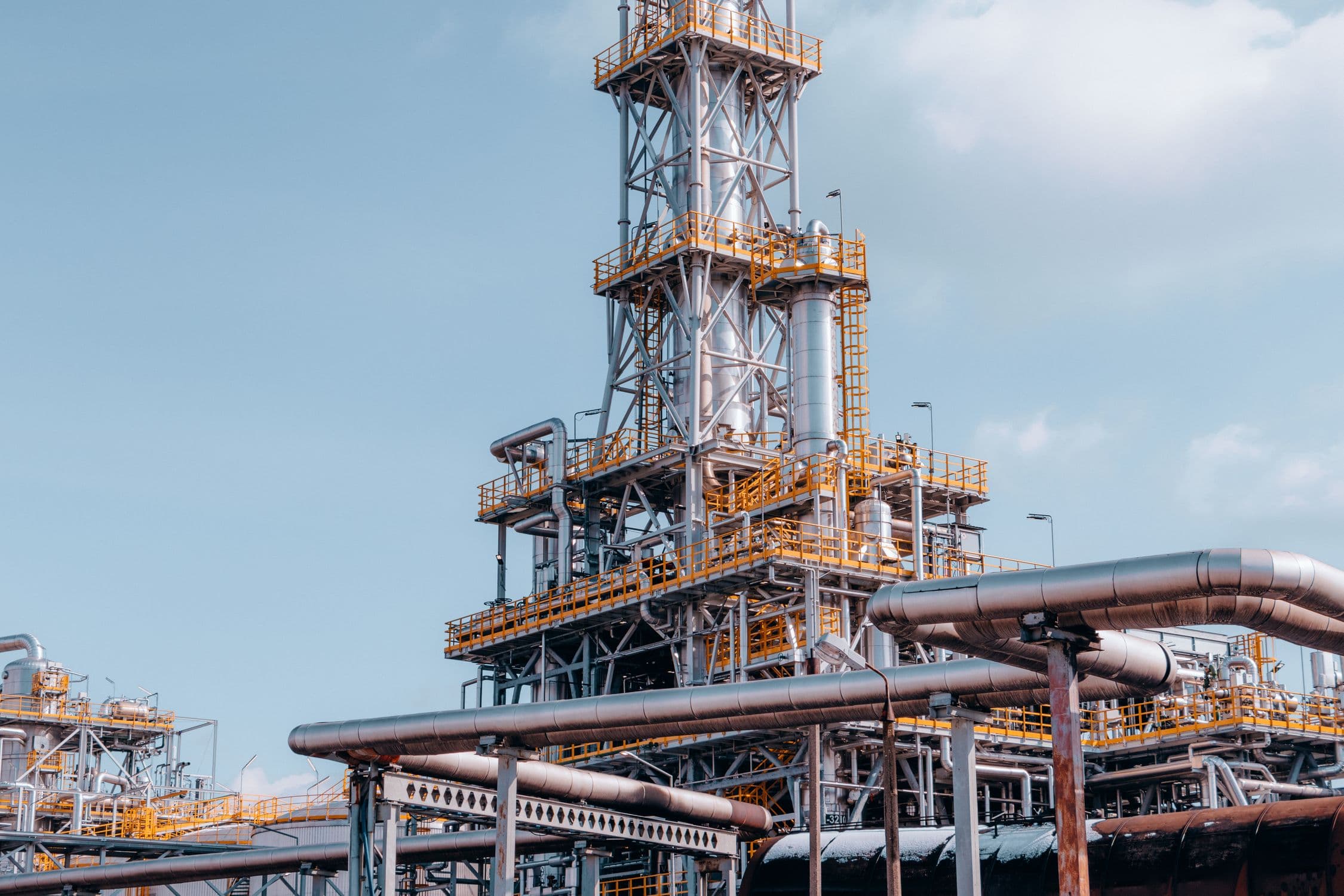
Photo by Jakub Pabis on Pexels
What Industrial Process Refrigeration Actually Means
The phrase "industrial process refrigeration" sounds self-explanatory, but the regulatory definition is narrower than the colloquial sense. Under 40 CFR § 84.102, industrial process refrigeration refers to complex customized appliances used in the chemical, pharmaceutical, petrochemical, and manufacturing industries that are directly linked to an industrial process. The cooling is integral to producing, processing, or handling a material — not to keeping people comfortable, and not to preserving inventory in a supermarket display case.
The distinction matters because the rule treats IPR differently. The appliance categories under § 84.106 — comfort cooling, commercial refrigeration, industrial process refrigeration, and other — each carry different leak-rate triggers, repair clocks, and reporting posture. Calling a system "industrial" because it sits in a factory is not the same as the system meeting the regulatory definition of IPR.
The working test: ask whether the refrigeration is providing cooling for one of the following:
- A chemical reaction (e.g., exothermic polymerization that needs heat rejection)
- A process stream (e.g., chilling a fluid in a heat exchanger to hit a setpoint)
- A manufactured product during fabrication (e.g., cooling injection molds, freezing food before packaging)
- A laboratory or production environment whose temperature drives product quality (e.g., a biopharma cleanroom)
If the cooling is supporting an industrial process directly, you are almost certainly in IPR territory. If the cooling is for people (offices, sales floors) or for ordinary food retail (open display cases, walk-in coolers in a grocery store), you are not.
Comfort Cooling vs IPR: Why the Line Matters
The most common applicability question at industrial sites is whether a given chiller is comfort cooling or IPR. The same model of centrifugal chiller can serve either purpose depending on what it is piped to. The classification is determined by the use of the cooling load, not by the equipment nameplate.
| Feature | Comfort Cooling | Industrial Process Refrigeration |
|---|---|---|
| Cooling target | Air for occupied spaces | Process fluid, reaction, or production environment |
| Typical leak-rate trigger | 10% | 30% (higher threshold; carry-over from the § 608 framework) |
| Repair clock | 30 days standard | 30 days standard, with industrial process shutdown provisions |
| ALD obligation | Usually no | Yes, if charge is 1,500 lb or greater with GWP > 53 |
| Typical examples | Office HVAC, hotel chillers, school AC | Reactor jacket cooling, blast freezer, fermenter chiller |
The IPR leak-rate threshold is intentionally higher than the comfort cooling threshold. EPA acknowledged in the rulemaking that IPR systems often run with larger charges, longer pipe runs, and more flanged connections than comfort systems, and that an aggressive comfort-cooling leak rate trigger applied to IPR would force frequent shutdowns of equipment that is hard to take offline without halting production. The higher trigger is a calibration, not a free pass.
For a deeper look at the underlying calculation methodology, see the leak rate calculation guide — the same annualized and rolling-average methods apply, only the numeric threshold differs by appliance category.
The Charge-Size Threshold and How It Treats Large IPR Systems
Section 84.106 applies to appliances with a full charge of 15 pounds or greater of a regulated substance or a substitute with a GWP greater than 53. For nearly all IPR equipment, this threshold is met many times over. A modest ammonia low-stage chiller can hold several hundred pounds; large refrigerated process loops in chemical plants can hold tens of thousands of pounds across a single appliance.
When charge sizes climb into the multiple-thousands of pounds, a few additional layers kick in:
- Automatic leak detection (§ 84.108): IPR appliances with a full charge of 1,500 pounds or more, containing a regulated substance or substitute with GWP greater than 53, must be equipped with an ALD system. See the dedicated automatic leak detection guide for the technical specifications and installation deadlines.
- Retrofit or retirement plans: If an IPR system chronically exceeds its leak-rate threshold and conventional repairs do not bring it back into compliance, the owner must submit a retrofit or retirement plan. Large IPR systems frequently trigger this provision because the cost and downtime of a full refrigerant conversion is significant, and shifting back into compliance under the original refrigerant may be impossible at end-of-life. See the retrofit and retirement guidance for the documentation and timing.
- Recordkeeping intensity: Larger IPR systems generate more service events, more charge-change documentation, and more leak inspection records. The § 84.106(l) recordkeeping obligation does not scale with system size, but in practice the administrative burden does.
The 15-pound threshold is the on/off switch; the 1,500-pound threshold is the ALD switch. Both apply at the appliance level, not at the facility level, so a single plant with twenty 800-pound systems is not subject to ALD by virtue of having 16,000 pounds total on site.
The Ammonia and CO2 Carve-Outs
A defining feature of industrial process refrigeration is the heavy use of natural refrigerants — primarily anhydrous ammonia (R-717) and carbon dioxide (R-744). Subpart C is structured around regulated substances and substitutes with global warming potential greater than 53. Both ammonia and CO2 sit outside that scope for most purposes:
- Ammonia (R-717): Not an HFC. Not on the list of regulated substances under the AIM Act. GWP of zero. An ammonia-only IPR system is not subject to § 84.106 leak repair obligations. However, ammonia is comprehensively regulated under OSHA PSM (29 CFR 1910.119) and EPA RMP (40 CFR Part 68) at process-safety thresholds (10,000 pounds), and that regime is more demanding than Subpart C in many respects. An ammonia facility is not unregulated; it is regulated by a different rule.
- CO2 (R-744): GWP of 1, well below the GWP > 53 cutoff. Pure CO2 systems are outside the § 84.106 framework. Cascade and transcritical CO2 systems are increasingly common in food processing and supermarket retail because they sidestep the HFC compliance burden entirely.
The carve-outs do not mean the systems are unregulated. They mean the systems fall outside Subpart C's leak repair, ALD, and recordkeeping framework. A facility manager who replaces an R-22 industrial chiller with an ammonia or transcritical CO2 system is buying out of § 84.106, but is also accepting the operating profile of a different refrigerant — different safety footprint, different training requirements, and in the ammonia case, different EPA oversight under RMP.
Mixed systems: Cascade systems often pair CO2 on the low side with an HFC or HFO on the high side. The HFC charge, even if relatively small, can still bring the appliance under § 84.106 if it exceeds the 15-pound threshold and uses a substance with GWP > 53. Charge accounting needs to address each circuit separately rather than treat the system as a single unit.
Chemical and Petrochemical Plants
Chemical and petrochemical facilities are the archetype Subpart C drafters had in mind when they wrote the IPR provisions. The cooling loads are continuous, the charges are large, and the systems are custom-engineered around process needs rather than purchased off a catalog page.
Typical IPR applications in this sector include:
- Reactor jacket cooling for exothermic processes (polymerization, esterification, hydrogenation)
- Process condenser cooling on distillation columns
- Low-temperature solvent recovery
- Refrigerated chemical storage (e.g., chilled monomer tanks to inhibit polymerization)
- Cryogenic separations downstream of olefin crackers
Many of these systems were originally charged with R-22, then transitioned to R-404A or R-507A in the early 2010s, and now face a third transition under the AIM Act phasedown to lower-GWP alternatives or natural refrigerants. The owner-operator obligations under § 84.106 follow the refrigerant: when R-404A is in the system, the system is subject to Subpart C; when the system is converted to ammonia, it leaves the Subpart C scope and enters the OSHA PSM scope (if the charge exceeds the threshold).
For chemical operators planning fleet-wide refrigerant strategy, the interaction with the broader HFC phasedown schedule matters: the supply availability of high-GWP HFCs in 2026 and beyond is shrinking, and the leak-replacement charge cost has climbed materially compared to pre-phasedown levels.
Food Processing and Cold Storage
Food processing plants and large refrigerated warehouses are the single biggest user of industrial-scale ammonia refrigeration in the United States, but plenty of facilities — particularly older sites and smaller processors — still operate large HFC systems that fall squarely under § 84.106.
Specific IPR functions in food processing include:
- Blast freezers for protein products at the end of a production line
- Spiral and tunnel freezers for prepared foods
- Ice cream hardening rooms
- Process chilling for dough, dairy, and beverage operations
- Refrigerated holding and aging rooms for cheese, meat, and produce
The IPR designation usually applies because the cooling is integral to the product itself — not to maintaining a comfortable working temperature. A protein-processing plant that uses a 6,000-pound R-507A system to freeze chicken parts before packaging is operating an IPR system subject to the 30% leak-rate threshold and, because the charge exceeds 1,500 pounds, the ALD obligation under § 84.108.
Importantly, the holding warehouse that keeps the same chicken cold after packaging is generally classified as commercial refrigeration, not IPR, because it is preserving product rather than transforming it. That distinction affects the leak-rate trigger (20% for commercial refrigeration vs 30% for IPR) and is worth getting right at the inventory stage.
Biopharmaceutical Manufacturing
Biopharma sites present some of the trickiest IPR classification questions in the regulated universe. A single facility often runs several distinct cooling loops:
- Process chillers tied to fermenters and bioreactors. These are IPR — the cooling is integral to the biological reaction occurring inside the vessel.
- Cleanroom HVAC serving GMP manufacturing areas. Even though product quality depends on cleanroom conditions, the cooling load is air conditioning the room. EPA generally treats this as comfort cooling unless the cooling is directly tied to the process (e.g., a chilled jacket on a manufacturing vessel).
- Process water and water-for-injection (WFI) cooling. These cool a process stream and are typically IPR.
- Ultra-low-temperature storage (e.g., −80 °C freezers for biologic intermediates and finished product). Often charged with HFC blends, often above the 15-pound threshold, and generally classified as commercial refrigeration or IPR depending on whether the freezer is holding finished inventory or stabilizing in-process material.
Biopharma operators frequently get the cleanroom-HVAC classification wrong, particularly when the chiller is large and dedicated. The temptation is to call it IPR because the system is critical to GMP production. Critical and integral are different concepts in the rule — a building chilled-water plant serving cleanrooms is comfort cooling, even if a process failure follows from its outage. The determining factor is the load itself, not its downstream importance.
Where the same chilled-water loop also serves a process heat exchanger (e.g., cooling a buffer skid), the appliance can become a mixed-use system. EPA guidance has generally classified mixed-use systems by the predominant load, but the conservative path is to treat the system under the stricter applicable rule and document the analysis in the compliance file.
Exemptions, Exclusions, and Edge Cases
A few categories sit at the edge of IPR applicability and are worth calling out:
- Below-15-pound systems: Process chillers with full charges under 15 pounds are not subject to § 84.106 leak repair. Small lab-bench chillers and recirculating coolers in research settings often fall here, even if the broader facility is heavily regulated.
- Mobile refrigeration: Refrigerated transport units and motor-vehicle air conditioning are governed by other parts of the framework, not § 84.106's stationary appliance regime.
- Process-shutdown extensions: When a leak repair requires shutting down a continuous industrial process and a scheduled shutdown is not feasible inside the 30-day clock, IPR owners can rely on the industrial process shutdown extension. The extension is not automatic; it requires documenting why the repair could not be completed within the standard window. This is one of the more frequently used IPR-specific provisions and one of the more frequently misdocumented.
- Mothballed systems: A system that has been evacuated to atmospheric pressure and tagged out of service is no longer a refrigerant-containing appliance for § 84.106 purposes, but documentation of the evacuation and ongoing status is necessary to demonstrate the system is not in scope.
The exemptions are narrow, and EPA does not look kindly on owners who reclassify a system to escape a leak-rate threshold without clear documentation supporting the new category. The conservative posture is to assume IPR applicability for any large process-cooling system using a regulated substance or a substitute with GWP > 53, and to document the classification reasoning in the equipment file.
Building an IPR Compliance Posture That Actually Works
The practical challenge with IPR compliance is not understanding the rule — it is operating the compliance program at the scale and pace of an industrial plant. A handful of habits separate facilities that breeze through an EPA inspection from facilities that do not:
1. Maintain a precise appliance inventory
Each appliance needs a discrete identifier, full-charge weight, refrigerant type, GWP, current appliance category (comfort cooling, commercial, IPR, or other), and the classification reasoning. Without this baseline, every leak-rate calculation and category-specific threshold becomes a guessing game.
2. Track every charge-and-discharge event at the appliance level
The rolling-average leak rate calculation is only as good as the charge change documentation behind it. Industrial sites with multiple service contractors need a single shared system of record so that no service event is captured in one contractor's file and missed by the owner's.
3. Calendar the repair clocks
The 30-day repair clock and the industrial process shutdown extension both require explicit date tracking. A system that relies on the maintenance crew to remember when the trigger event occurred is one IPR retiree away from a missed deadline.
4. Document classification changes
When a system's use changes (a process chiller gets repurposed for cleanroom service, for example), the appliance category may change with it. Capture that decision contemporaneously with a brief written rationale, not after the next inspection.
For multi-site industrial operators trying to manage this across dozens of facilities and hundreds of appliances, manual recordkeeping on shared drives breaks down quickly. Dedicated refrigerant compliance software like RefriTrak links each appliance to its category, charge size, service history, and leak rate calculation in one place — which makes the difference between producing a clean audit trail in an afternoon and spending a week reconciling spreadsheets from three regions and four contractors. That kind of central system is not mandatory under § 84.106(l), but the recordkeeping obligation is hard to satisfy at industrial scale without one.
For a broader walkthrough of the documentation requirements, see the dedicated § 84.106(l) recordkeeping guide.
Frequently Asked Questions
Is a chilled-water plant in a manufacturing facility IPR or comfort cooling?
It depends on what the chilled water is doing. If it is air conditioning the building — including offices, production floors, or cleanrooms whose temperature is set for occupants and equipment longevity — it is comfort cooling. If the chilled water is feeding a process heat exchanger and removing heat from a chemical or biological process, it is IPR. The same physical chiller can be one or the other depending on the load it serves.
Are ammonia refrigeration systems regulated under 40 CFR Part 84?
No. Ammonia is not on the AIM Act list of regulated substances and has a GWP of zero, so § 84.106 does not apply to ammonia-only systems. Industrial ammonia systems are instead regulated under OSHA Process Safety Management (29 CFR 1910.119) and the EPA Risk Management Program (40 CFR Part 68) when the charge meets the 10,000-pound process safety threshold. The regulatory burden under those programs is substantial; ammonia is not unregulated, it is regulated by a different framework.
Does a CO2 transcritical system have to comply with § 84.106?
No. CO2 has a GWP of 1, well below the GWP > 53 threshold for substitutes covered by § 84.106. Pure CO2 systems fall outside the Subpart C leak repair, ALD, and recordkeeping framework. Note that cascade systems pairing CO2 with an HFC on the high side can still bring the HFC circuit under § 84.106 if its charge exceeds 15 pounds.
What is the IPR leak-rate trigger versus the comfort-cooling trigger?
Industrial process refrigeration is subject to a 30% annualized leak rate trigger. Commercial refrigeration is at 20%. Comfort cooling and other appliances are at 10%. Calling a system IPR rather than commercial or comfort cooling materially changes when a leak-rate exceedance kicks in — which is why classification needs to follow the rule's use-based test rather than the facility manager's intuition.
When does an industrial process shutdown extend the repair clock?
The IPR industrial process shutdown provision allows the standard 30-day repair clock to be extended when completing the repair requires shutting down a continuous process and an appropriate shutdown opportunity is not available inside the window. The extension is not automatic — the owner must document the circumstances, the next planned shutdown, and the corrective action plan. Treat it as a documented exception, not a default.
Does ALD apply to all IPR systems?
No. Automatic leak detection under § 84.108 applies only to IPR and commercial refrigeration appliances with a full charge of 1,500 pounds or greater that contain a regulated substance or substitute with GWP greater than 53. Below that charge size, ALD is not required, though it is often a sound operational investment for systems running expensive refrigerants.
Sources
- eCFR — 40 CFR § 84.102 (Definitions)
- eCFR — 40 CFR § 84.106 (Leak repair)
- eCFR — 40 CFR § 84.108 (Automatic leak detection)
- EPA — Final Rule: Emissions Reduction and Reclamation of HFCs
- EPA — Frequent Questions on the HFC Phasedown
- OSHA — 29 CFR 1910.119 (Process Safety Management)
- eCFR — 40 CFR Part 68 (Risk Management Program)
Related Resources
Automatic Leak Detection Under § 84.108 →
When ALD systems are required for IPR appliances and what technology qualifies under the rule
Leak Rate Calculation Methods →
Annualized and rolling-average methods that produce the leak rate compared against the IPR 30% threshold
Retrofit and Retirement Decisions →
When chronic leakers on industrial systems require retrofit or retirement plans, and how to document the choice
§ 84.106(l) Recordkeeping Requirements →
The documentation industrial owners must maintain for at least three years